A few years ago, I bought a cheap office chair online. It looked great in the pictures: "ergonomic," "best seller," "thousands sold," "limited time deal." And most importantly, it was £79 instead of £149, which in internet shopping language translates roughly to: congratulations, you are a financial genius.
Three months later, the chair sounded like a dying pirate ship every time I leaned back. By month six the cushioning had collapsed. By month eight I was sitting permanently tilted to the left like a confused flamingo. Eventually I threw it away and bought a more expensive chair, the one I still use today.
That was the first time I realised something uncomfortable about modern shopping: most people have no idea what "value" actually means anymore. Including me. We think we do, but we don't, because modern shopping isn't designed to help you make good decisions. It's designed to help you make fast ones. And those are very different things.
The internet broke our brains
Twenty years ago, shopping was simpler. You went into a shop, looked at maybe three options, bought one, and you were done.
Today you can compare 400 headphones, 900 air fryers, 70 slightly different phone chargers, and 18 versions of the same vacuum cleaner, all while fourteen tabs are open, Reddit says one thing, TikTok says another, the Amazon reviews look fake, the YouTube reviewers are sponsored, and "SALE ENDS TONIGHT" has somehow been running for four months. Somewhere inside all that noise, your brain quietly gives up.
So most people default to the easy signals: cheapest, most reviews, biggest discount, fastest delivery, familiar brand. It sounds logical, until you realise those metrics are often terrible indicators of actual value. The cheapest product may fail fastest. The most-reviewed product may just be the oldest listing. The biggest discount may be fake. The familiar brand may be charging a 40% premium for marketing. And the "best seller"? That often just means a lot of people made the same rushed decision you're about to.
Cheap is emotional
Here's the part nobody talks about: we think buying cheap is rational, but a lot of the time it's emotional. Cheap gives us a little dopamine hit: the feeling that we won, that we beat the system, that we avoided being cheated. Even when we didn't.
That £300 coffee machine reduced to £119 feels exciting even if you never make coffee, it breaks within a year, the replacement pods cost a fortune, and a £40 alternative would have been fine. The experience of getting a deal can completely overpower whether the purchase is actually any good.
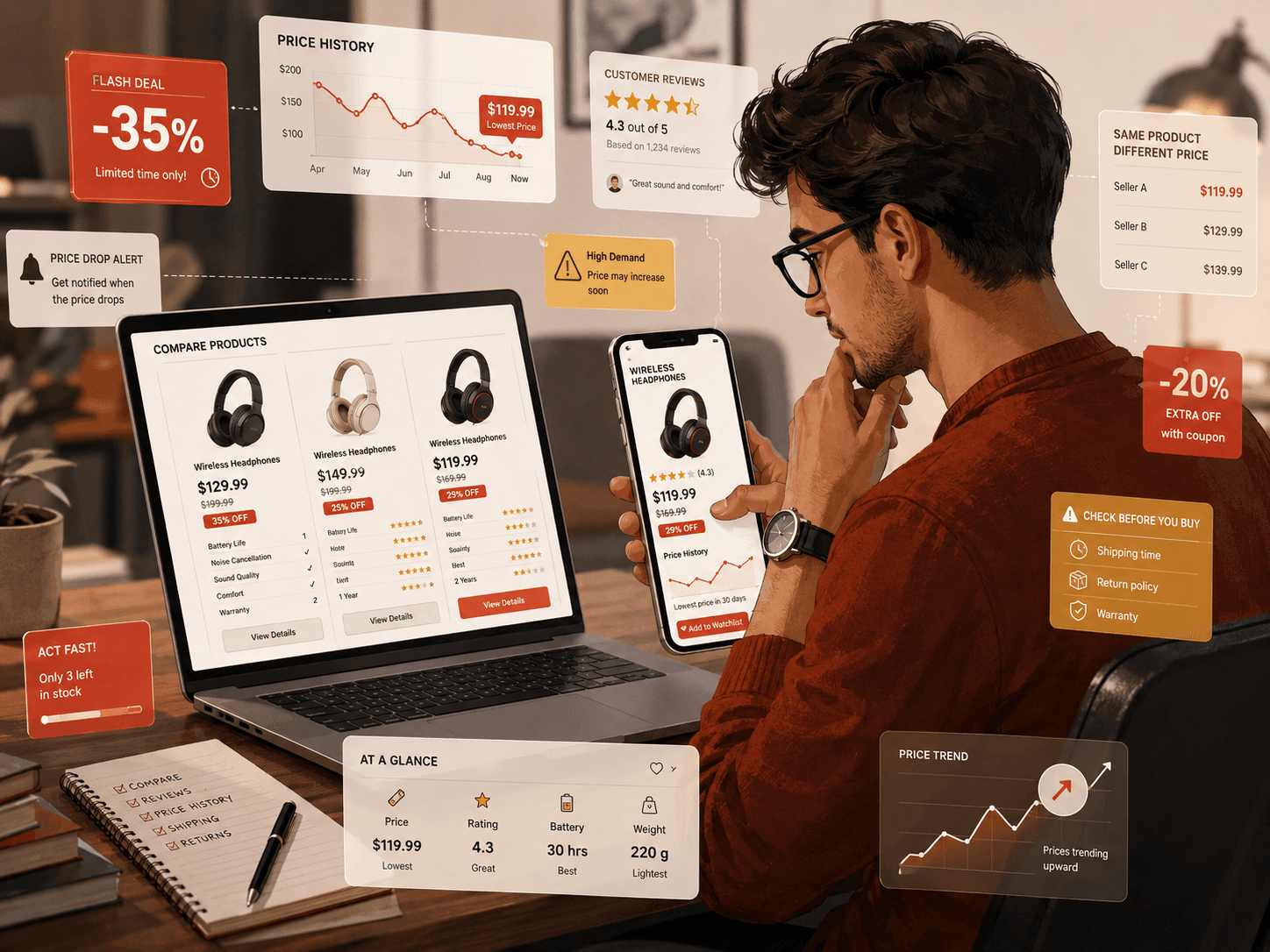
Retailers know this, which is why modern ecommerce is built around urgency: countdown timers, "only 2 left," lightning deals, crossed-out prices, "people are viewing this right now." Because speed kills analysis, and analysis kills impulse purchases.
This isn't a fringe concern, either. UK regulators have started fining companies over exactly these tactics. In 2026 the Competition and Markets Authority fined the AA £4.2 million over how it framed savings on breakdown cover, focusing on whether the advertised discounts reflected a genuine saving against a true "usual" price. Earlier action against mattress retailers including Simba and Emma targeted misleading discount claims and countdown timers specifically. The regulator's blunt summary of the rules: if urgency is used, it has to be real, and an offer framed as time-limited can't in practice run forever.
Reviews are broken too
Not completely, but enough that you can't trust them blindly anymore.
Think about when people review things. Most reviews land immediately after purchase, during the honeymoon phase, before any long-term durability is tested. A blender with 12,000 five-star reviews might simply mean "it survived three days," not "this is still excellent after four years."
Then add fake reviews, review farms, and incentivised reviews, a problem the CMA is now actively investigating across multiple companies. And finally there's the strangest factor of all: people psychologically defending their own bad purchases because they don't want to admit regret. So reviews often end up measuring excitement, expectation, and emotional justification far more than long-term value.
So what actually makes something valuable?
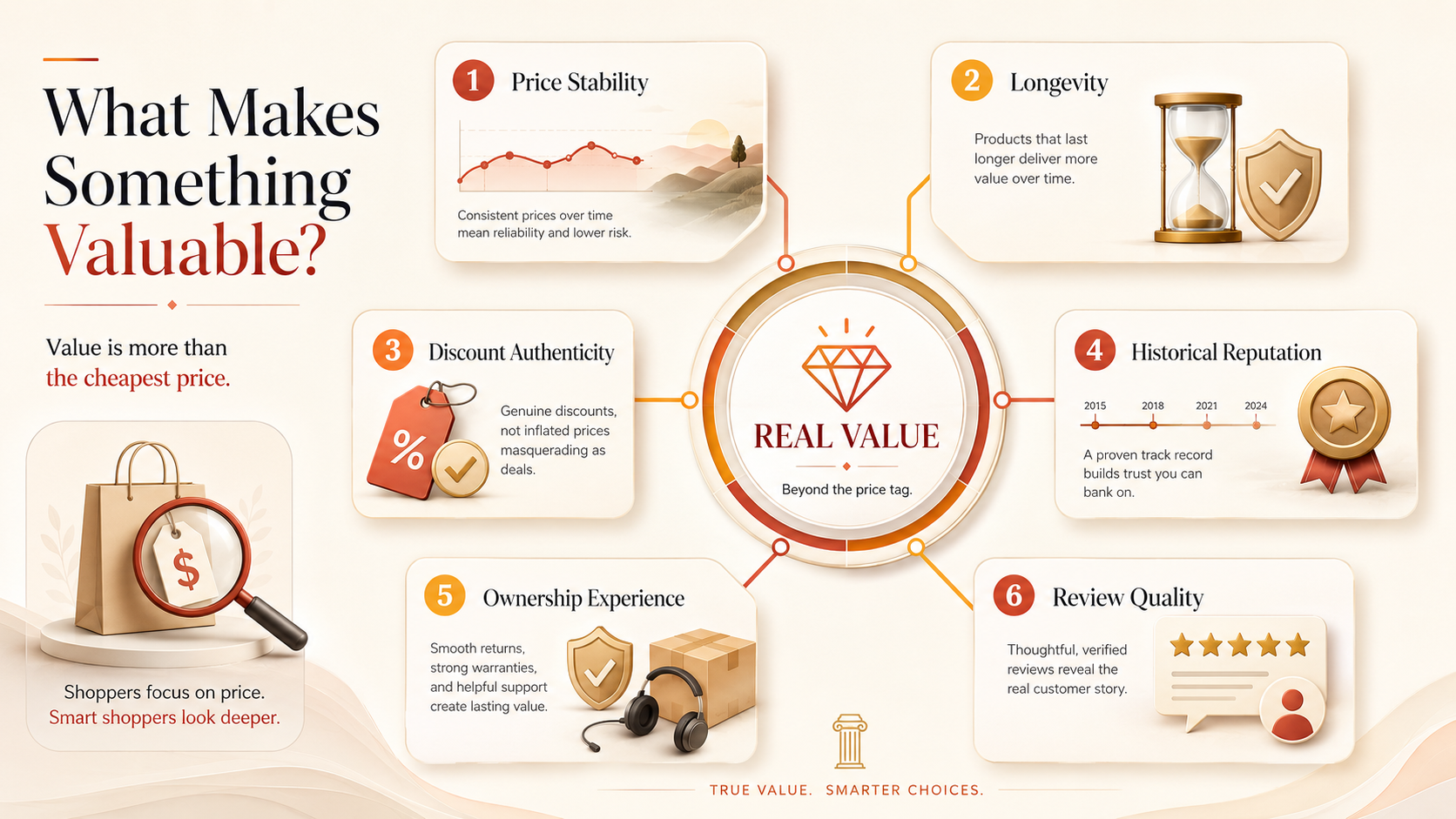
Genuine value is usually a combination of factors that the "cheapest first" mindset ignores entirely:
Price stability. Does the price swing around wildly? If so, you may just be buying at the wrong moment.
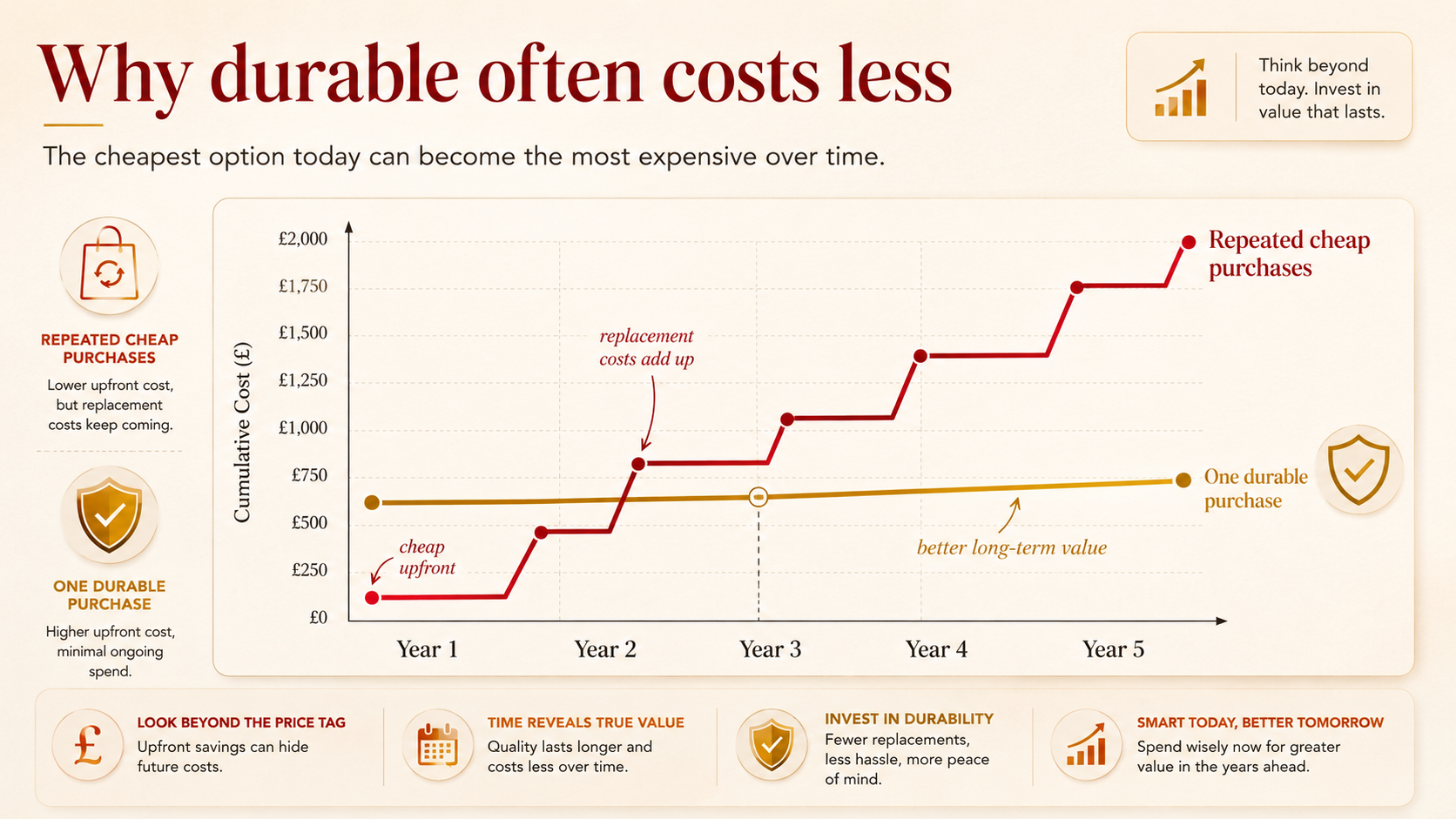
Longevity. Will it last three months or five years? People massively underestimate durability when judging value. A £200 item that lasts a decade is often cheaper than five £50 replacements, plus the frustration, wasted time, and bad experiences in between.
Discount authenticity. Was it genuinely discounted, or did the retailer quietly inflate the "original" price first? As the AA fine shows, this is common enough that regulators are now penalising it.
Historical reputation. Not influencer hype or launch excitement, but sustained reputation over years. There's a reason certain products quietly dominate without massive advertising.
Ownership experience. Returns, warranty, software support, battery degradation, ease of repair, the accessory ecosystem, customer support. All the things that matter after you buy, which is exactly why shoppers ignore them.
This is why we're developing the Salescache Value Score
At Salescache, we started with a simple question: what if a shopping platform measured value properly, not just cheapest, newest, trending, or sponsored?
A product shouldn't rank highly just because a retailer paid for visibility, inflated its discount, or happened to go briefly viral. So instead of asking "how cheap is this today?", the Salescache Value Score asks the harder question, "is this genuinely worth buying?", by combining the signals above: historical pricing, price volatility, review consistency, durability, retailer trust, and long-term ownership quality.
It's a much harder question to answer. We think it's also the only one that matters.
The strange future of shopping
Shopping will probably get more confusing before it gets better. AI-generated reviews are coming. Personalised pricing is growing. Retailers are getting more psychologically sophisticated, and the algorithms already know what time you shop, what devices you use, how impulsive you are, and which discounts trigger you.
Which means consumers need better filtering, not more noise. The future winners in ecommerce probably won't be the platforms that help you buy faster. They'll be the ones that help you regret less.
Most good purchases feel boring
This might be the most counterintuitive thing in the whole piece: the best purchases are usually emotionally unexciting. No adrenaline, no panic buying, no "70% OFF TODAY ONLY." Just solid products, fair pricing, good longevity, and a reliable ownership experience.
That's the real problem. We've accidentally turned shopping into entertainment, so people now optimise for excitement instead of value.
The internet trained us to believe lower price equals better deal. But real value is rarely that simple. Sometimes the best deal is the product that lasts longer, the item you never have to replace, the purchase that quietly works for years and causes no problems at all. Not every cheap product is bad, and not every expensive one is worth it, but the gap between price and value is one of the most misunderstood things in modern consumer life.
And over the next few years, that gap is only going to get bigger. Which is exactly why smarter shopping intelligence matters.