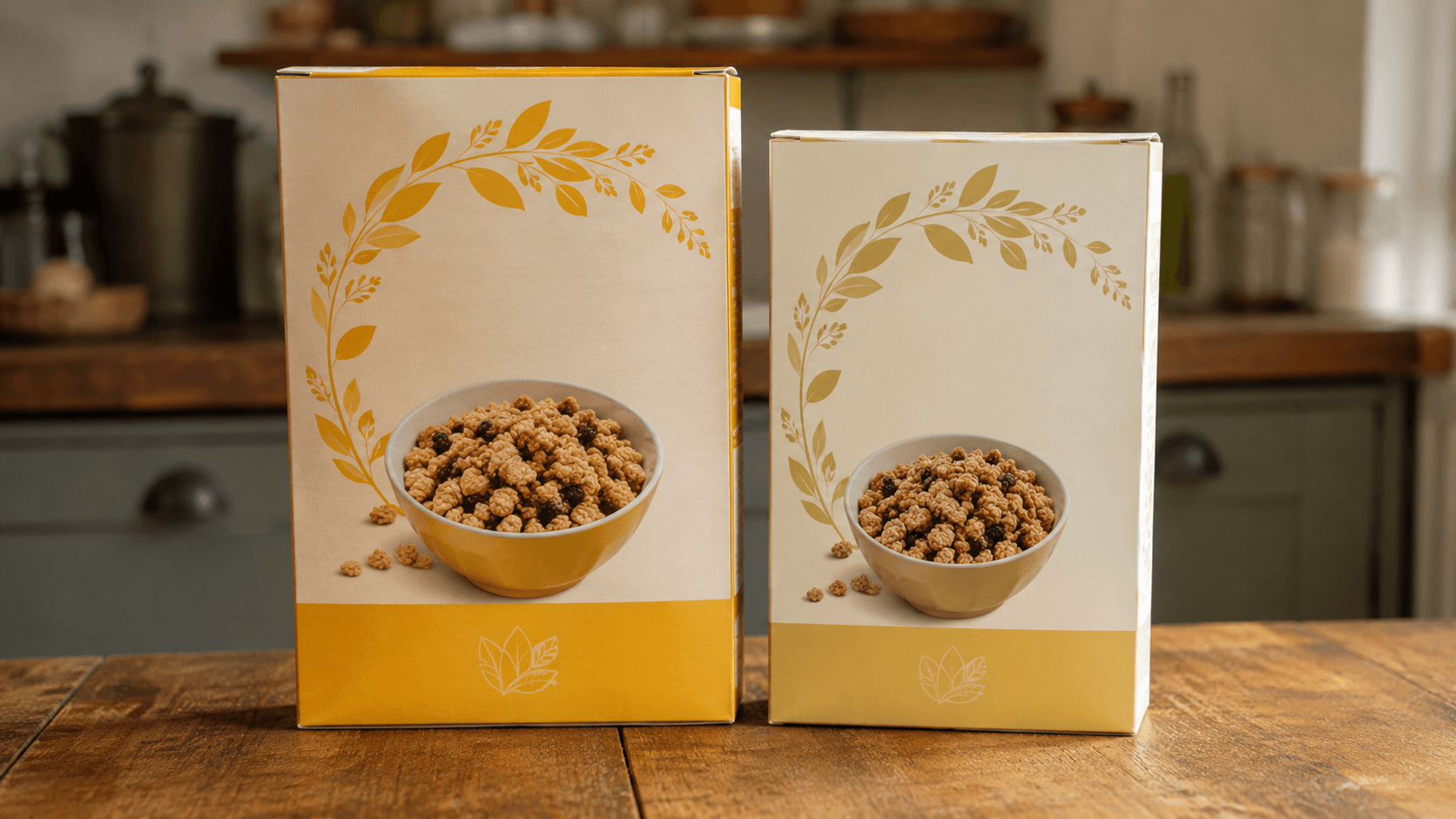
Most people can't remember exactly when they first noticed shrinkflation. They just remember the feeling. A chocolate bar seemed smaller. A cereal box felt lighter. A bag of crisps suddenly contained mostly air. Something that used to last a week now disappeared in four days.
At first it felt imaginary. Then it started happening everywhere. And eventually people began doing something strangely modern: standing in supermarket aisles quietly wondering whether they were being gaslit by packaging.
The strange thing is that shrinkflation works partly because it exploits a very specific psychological truth. People notice price increases faster than quantity reductions. Once you understand that, modern supermarket shelves begin making a lot more sense.
Shrinkflation is older than most people think
The term sounds modern, but the behaviour is not. Businesses have been quietly reducing quantity while holding prices steady for decades: fewer biscuits in a pack, thinner toilet rolls, reduced coffee quantities, slightly narrower tissues, less juice, and more empty space inside the packaging.
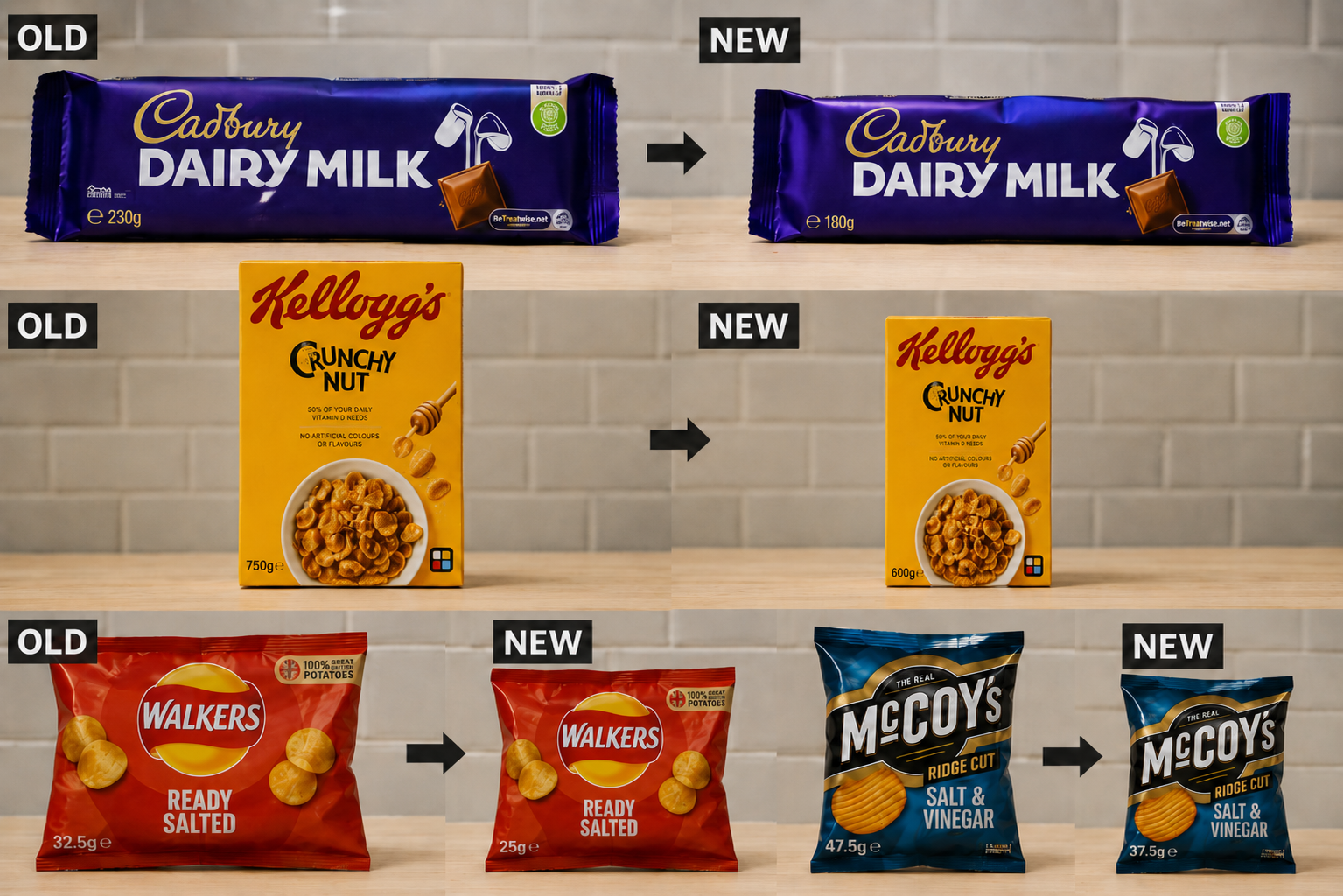
Sometimes the changes are tiny. A cereal box drops from 500g to 450g. A chocolate bar loses 10g. A multipack quietly removes one item. Individually these changes barely register, and that is partly the point.
Consumers are extremely sensitive to visible price jumps, but they are much worse at tracking subtle quantity reductions over time, especially when the packaging stays visually similar, the branding stays consistent, the shelf placement doesn't change, and the numerical reduction feels abstract. Most shoppers don't walk through supermarkets calculating price-per-gram in their heads. They shop through pattern recognition, and companies know it.
Why companies prefer shrinking products to raising prices
Imagine two scenarios. In the first, a chocolate bar increases from £1 to £1.20. In the second, the bar stays £1 but becomes slightly smaller. Economically, both may achieve similar outcomes for the manufacturer. Psychologically, they feel completely different. The first feels immediate and obvious; the second feels vague and uncertain.
That uncertainty matters enormously. Behavioural economists sometimes call this money illusion: people tend to focus heavily on visible nominal prices while underestimating hidden reductions in value elsewhere. Price increases create emotional friction such as frustration, comparison, resentment and reduced purchasing. Shrinkflation softens that reaction. The price appears stable, the visual familiarity remains intact, and the shopper experiences less immediate resistance.
From a business perspective, it can feel like the safer option, especially during inflationary periods when ingredient costs rise, transport becomes more expensive, wages increase and energy costs surge. At that point companies usually face three unpleasant choices: raise prices, reduce quality, or reduce quantity. Shrinkflation often becomes the least visibly painful option, at least initially.
Packaging has become incredibly sophisticated
One reason shrinkflation works so effectively is that packaging design evolved alongside it. Modern packaging is built to preserve visual presence even when the actual quantity decreases, which means companies can reduce product size while maintaining shelf visibility, perceived fullness and brand familiarity.
A crisp packet may stay physically large while holding more air. A yoghurt pot may use thicker internal walls. A bottle may grow taller and narrower while containing less liquid. A chocolate tray may introduce larger gaps between the pieces. These adjustments sound minor individually, but multiplied across millions of units they become economically enormous.
What makes this especially effective is that human beings judge quantity visually far more than mathematically. Most people remember "the normal cereal box," not "the cereal box containing exactly 500 grams." That distinction gives packaging designers a surprising amount of room to shape perception.
Shrinkflation feels personal
Part of the reason people react emotionally to shrinkflation is that food shopping is deeply habitual. Consumers build subconscious expectations around portion sizes, product weight, household routines, how long things last, and simple visual familiarity. When those expectations quietly change, people feel a subtle sense of distrust, not necessarily because the reduction itself is catastrophic, but because the relationship feels less honest.
This is why shrinkflation discussions often become unusually heated online. People aren't only reacting to inflation. They're reacting to the feeling that brands are trying to make the change less noticeable. And sometimes they are.
Some products became symbols of shrinkflation
Certain brands became almost culturally associated with the phenomenon. The clearest example is Toblerone. In November 2016, Mondelez widened the gaps between the triangular chunks of its UK bars, cutting the 170g bar to 150g and the 400g bar to 360g while keeping the packaging the same length. The backlash was immediate and enormous: the story reportedly out-trended the US presidential election on UK news sites that week, precisely because the change was visually impossible to ignore. By 2018, after sustained public anger, Toblerone reversed the redesign and restored the original shape.
The pattern hasn't gone away. As recently as 2024, with cocoa prices spiking, Christmas favourites quietly shrank again: tubs of Quality Street fell from 600g to 550g and Celebrations from 550g to 500g, while prices held or rose. Chocolate, crisps and cereal trigger these reactions repeatedly because consumers interact with them so often, and small reductions are easier to spot in products you know intimately.
What makes these examples interesting is that the outrage is rarely proportional to the quantity change itself. The reaction is about violated expectation. Consumers feel they had an unspoken agreement with the product, same brand, same price, same experience, and shrinkflation quietly breaks it.
The problem is bigger than food
Food gets the most attention because it's so visible, but shrinkflation appears across many industries: toiletries, cleaning products, subscription services, software, travel and loyalty schemes. Sometimes the product itself doesn't shrink. The value does.
Airlines trim baggage allowances. Streaming services add adverts to plans that used to be ad-free. Subscriptions lose features. Hotel rooms get smaller. Delivery minimums creep upward. The pattern stays remarkably consistent: hold the headline price steady while quietly reducing the underlying value.
The honest takeaway
Shrinkflation isn't really a trick so much as a bet, a wager that you'll feel the change long before you can prove it, and that the vague unease of "didn't this used to be bigger?" is easier to absorb than the sharp sting of a higher price. For a long time, that bet paid off.
What's shifting now is awareness. Once you know to look at the weight printed on the pack rather than the size of the box, and at the price per 100g rather than the price on the shelf edge, the illusion loses most of its power. The reductions are still there, but they stop being invisible. And a quantity reduction you can see is a very different thing from one you can only feel.
That may be the quiet lesson in all of it. The most reliable defence against shrinkflation isn't outrage. It's attention.